Projector Screens Decoded: 7 Myths That Are Costing You Picture Quality
When people shop for a projector, they compare brightness, resolution, HDR performance, and smart features.
Then they spend two minutes choosing the screen.
That's often a costly mistake.
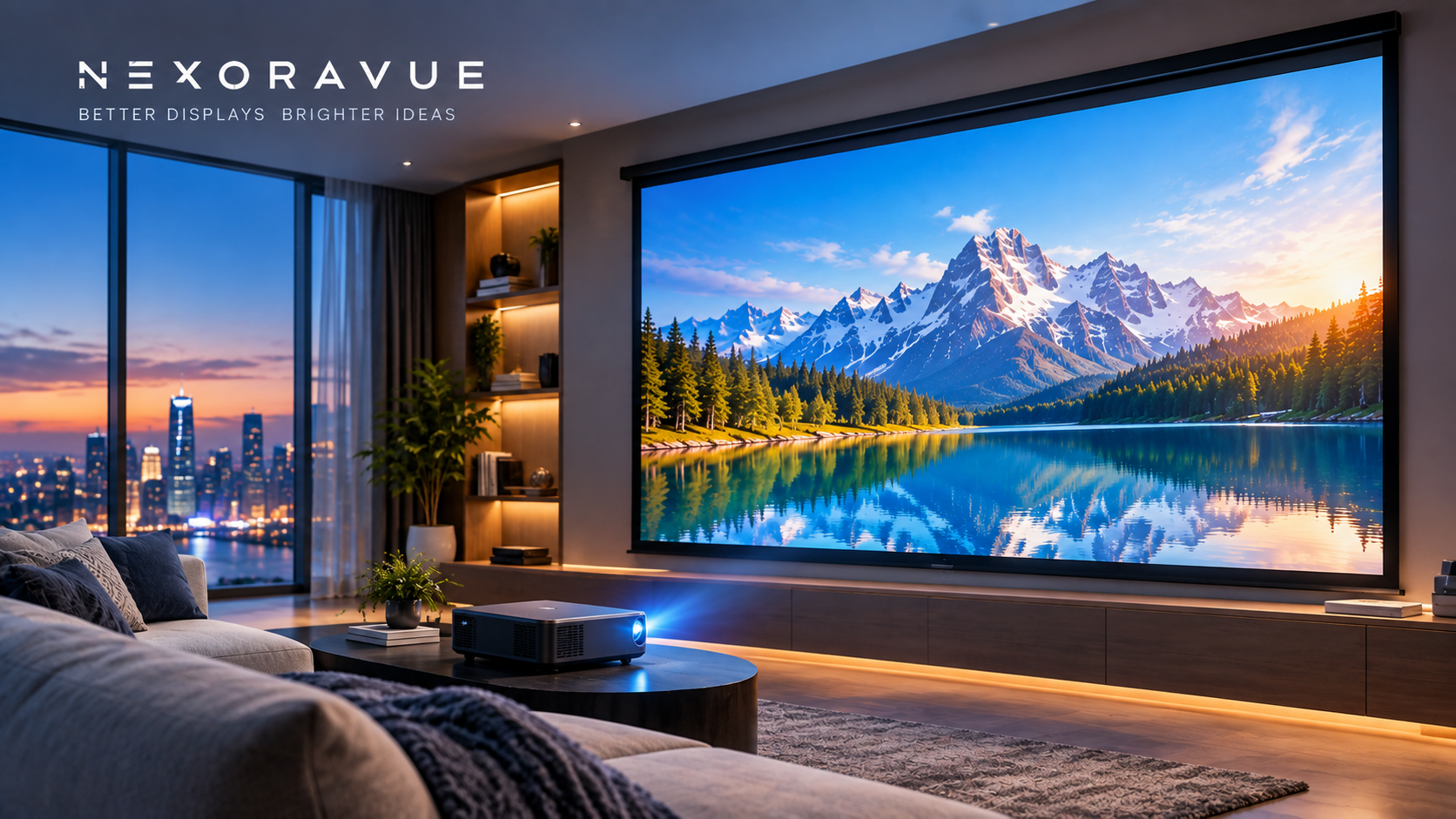
Many first-time buyers assume the projector creates the image and the screen simply displays it. In reality, the projection screen directly influences brightness, contrast, color accuracy, viewing angles, and overall image quality. Industry experts often describe the screen as half of the viewing experience because the surface determines how projected light is reflected back to the audience.
If you've invested in a quality projector, choosing the right screen is one of the smartest upgrades you can make.
Let's separate fact from fiction.
Myth #1: “A White Wall Works Just as Well as a Projector Screen”
Reality:
A projector screen is engineered specifically to manage light.
While a painted wall may look smooth from a distance, it contains texture, imperfections, seams, and color variations that can soften details and reduce image accuracy. Dedicated projection screens are designed to provide a controlled reflective surface that preserves sharpness, brightness, and color consistency.
What You Actually See
With a proper screen:
✓ Sharper images
✓ Better contrast
✓ More accurate colors
✓ Greater brightness uniformity
✓ Improved viewing experience
A projector can only perform as well as the surface it's projecting onto.
Myth #2: “All Projector Screens Are Basically the Same”
Reality:
Projector screens come in multiple materials and configurations designed for different environments.
The best screen for a dedicated home theater may not be the best choice for a bright living room.
Popular screen categories include:
-
Fixed Frame Screens
-
Motorized Screens
-
Manual Pull-Down Screens
-
Portable Screens
-
ALR Screens
-
UST Screens
-
Outdoor Screens
Each serves a different purpose and viewing environment.
Myth #3: “The Brighter the Projector, the Less the Screen Matters”
Reality:
Brightness alone cannot solve every image problem.
Many people assume adding more lumens automatically creates a better picture.
However, room lighting, screen gain, screen material, and viewing conditions all affect perceived image quality. Even a bright projector can look washed out if the screen is poorly matched to the environment.
A properly selected screen often delivers a bigger improvement than upgrading to a more expensive projector.
Myth #4: “Fixed Frame Screens Are Only for Luxury Home Theaters”
Reality:
Fixed frame screens are often considered the gold standard because they maintain a perfectly tensioned projection surface.
Unlike retractable screens, they don't develop waves, wrinkles, or edge curl over time.
Benefits include:
Perfect Flatness
Image geometry remains consistent.
Better Uniformity
Brightness stays even across the entire screen.
Long-Term Stability
No moving parts means fewer maintenance concerns.
This is why fixed frame screens remain the preferred choice for dedicated home theater installations.
Myth #5: “Ambient Light Is the Enemy of Every Projector”
Reality:
Ambient light can be managed.
This is where Ambient Light Rejecting (ALR) screens become extremely valuable.
ALR technology uses specialized optical structures to:
-
Reflect projector light toward viewers
-
Reject unwanted room lighting
-
Improve perceived contrast
-
Preserve image visibility in brighter spaces
For living rooms, family rooms, and multi-purpose spaces, ALR screens can dramatically improve performance.
Myth #6: “Bigger Is Always Better”
Reality:
The best screen size depends on:
-
Room dimensions
-
Seating distance
-
Projector brightness
-
Viewing preferences
A screen that is too large may reduce perceived brightness.
A screen that is too small may limit immersion.
Professional installers generally recommend balancing screen size with seating distance to achieve comfortable viewing without sacrificing image quality.
Quick Rule
Choose the largest screen your room can comfortably support while maintaining adequate brightness and viewing comfort.
Myth #7: “A Projector Screen Is Just an Accessory”
Reality:
A projector screen is a performance component.
Think of it this way:
The projector creates light.
The screen shapes the final image.
The relationship is similar to:
-
Camera + Lens
-
Computer + Monitor
-
Speaker + Room Acoustics
Industry professionals consistently emphasize that the screen plays a critical role in determining what viewers actually see.
How to Choose the Right Projector Screen
Rather than focusing only on size, ask these four questions.
1. Where Will You Use It?
Dedicated Home Theater
Best Choice:
-
Fixed Frame Screen
-
Matte White Surface
Excellent for dark rooms and cinematic performance.
Living Room
Best Choice:
-
ALR Screen
-
Motorized Screen
Designed to handle ambient light and shared spaces.
Outdoor Movie Nights
Best Choice:
-
Portable Screen
-
Outdoor Projection Screen
Easy setup and transport.
2. How Much Light Is in the Room?
Low-Light Rooms
A standard white screen often delivers the most natural image quality.
Bright Rooms
ALR technology can significantly improve contrast and visibility.
3. What Type of Projector Do You Own?
Not every screen works with every projector.
Ultra Short Throw (UST) projectors require specially designed UST-compatible screens because the projection angle differs dramatically from traditional projectors.
Matching the screen to the projector type is essential for achieving optimal performance.
4. Is Flexibility Important?
If your room serves multiple purposes:
-
Retractable Screens
-
Motorized Screens
offer excellent flexibility.
If performance is the top priority:
-
Fixed Frame Screens
remain the benchmark solution.
The Future of Projection Screens
Projection technology continues to evolve rapidly.
Today's premium screens are incorporating:
Advanced Optical Layers
Better light management and improved image quality.
Ultra-Short-Throw Optimization
Designed specifically for laser TV systems.
Improved ALR Performance
Brighter images in challenging lighting environments.
Larger Viewing Experiences
Delivering true cinematic scale without the size limitations of traditional televisions.
As projector technology advances, screen technology is evolving alongside it to unlock even greater visual performance.
Why the Right Screen Matters More Than Most People Realize
The biggest surprise for many projector owners is this:
A screen isn't just where the image appears.
It's where image quality is created.
The difference between projecting onto a wall and projecting onto a purpose-built screen can be dramatic. Better contrast, cleaner detail, improved brightness, and greater immersion all begin with the surface itself.
Whether you're building a dedicated home theater, upgrading your living room entertainment system, or creating an outdoor movie experience, the right projector screen helps unlock the full potential of your projector.